Our expertise
Expertise in Parotid Surgery
The parotid gland, located in front of the ear, can be affected by various conditions requiring specialized surgical expertise. Dr. Bouguila masters the most advanced parotidectomy techniques with facial nerve preservation, guaranteeing optimal functional and aesthetic results. More than 200 parotidectomies performed, with a facial nerve preservation rate of 99%.
Key points
What makes the difference
Nerve Preservation
Surgical techniques preserving the integrity of the facial nerve with intraoperative monitoring.
Conservative Approach
Partial or total parotidectomy according to indications with maximum preservation of healthy tissue.
Reconstruction
Reconstruction techniques to optimize aesthetic results and prevent complications.
Surgical techniques
Pleomorphic Adenoma
The most common benign tumor of the parotid, requiring complete excision to avoid recurrence.
Warthin's Tumor
Often bilateral benign tumor, more common in smokers, requiring surveillance or surgery.
Carcinomas
Rare malignant tumors requiring multidisciplinary oncological management and extensive surgery.
Lithiasis
Calculi of the Stensen's duct causing recurring pain and swelling during meals.
Chronic Parotitis
Recurring chronic inflammations resistant to conservative medical treatment.
Trauma
Traumatic injuries to the gland or parotid duct requiring surgical repair.
Partial Parotidectomy
Removal of the superficial lobe of the parotid with preservation of the facial nerve for small benign tumors.
- Maximum gland preservation
- Minimal risk of facial paralysis
- Faster recovery
- Fewer complications
Total Parotidectomy
Complete removal of the parotid gland with meticulous dissection of the facial nerve for large tumors.
- Complete excision of lesions
- Prevention of recurrence
- Optimal oncological control
- Nerve preservation techniques
Nerve Monitoring
Electrophysiological monitoring of the facial nerve during the procedure to optimize its preservation.
- Precise nerve identification
- Control of nerve integrity
- Risk reduction
- Increased surgical safety
Reconstruction
Filling and reconstruction techniques to prevent Frey's syndrome and optimize the aesthetic result.
- Prevention of Frey's syndrome
- Better aesthetic result
- Filling of the depression
- Optimized patient satisfaction
Surgical techniques
Pleomorphic Adenoma
The most common benign tumor of the parotid, requiring complete excision to avoid recurrence.
Warthin's Tumor
Often bilateral benign tumor, more common in smokers, requiring surveillance or surgery.
Carcinomas
Rare malignant tumors requiring multidisciplinary oncological management and extensive surgery.
Lithiasis
Calculi of the Stensen's duct causing recurring pain and swelling during meals.
Chronic Parotitis
Recurring chronic inflammations resistant to conservative medical treatment.
Trauma
Traumatic injuries to the gland or parotid duct requiring surgical repair.
Partial Parotidectomy
Removal of the superficial lobe of the parotid with preservation of the facial nerve for small benign tumors.
- Maximum gland preservation
- Minimal risk of facial paralysis
- Faster recovery
- Fewer complications
Total Parotidectomy
Complete removal of the parotid gland with meticulous dissection of the facial nerve for large tumors.
- Complete excision of lesions
- Prevention of recurrence
- Optimal oncological control
- Nerve preservation techniques
Nerve Monitoring
Electrophysiological monitoring of the facial nerve during the procedure to optimize its preservation.
- Precise nerve identification
- Control of nerve integrity
- Risk reduction
- Increased surgical safety
Reconstruction
Filling and reconstruction techniques to prevent Frey's syndrome and optimize the aesthetic result.
- Prevention of Frey's syndrome
- Better aesthetic result
- Filling of the depression
- Optimized patient satisfaction
Your journey
Care pathway
Each step is designed for your comfort and safety.
The facial nerve passes through the parotid gland. Its meticulous dissection under nerve monitoring allows its preservation in more than 95% of cases. Transient paresis is possible but usually recovers within a few weeks.
It is a phenomenon of sweating on the cheek during meals, due to aberrant regeneration of nerve fibers. It affects 30-50% of patients and is treated by botulinum toxin injections.
The incision follows the pre-auricular fold and the contour of the earlobe, then descends into a neck fold. It is therefore very discreet once healed.
Other Solutions
View AllCleft lip and palate
Comprehensive management of cleft lip and palate in children and adults. Advanced surgical techniques to restore anatomy and function with optimal aesthetic and functional results.
Learn more
Orthognathic surgery
Surgical correction of jaw deformities to improve dental occlusion, masticatory function and facial aesthetics. Modern techniques with 3D planning for optimal results.
Learn more
Facial traumatology
Specialized management of fractures and facial trauma. Modern repair techniques with restoration of function and aesthetics for optimal return to normality.
Learn more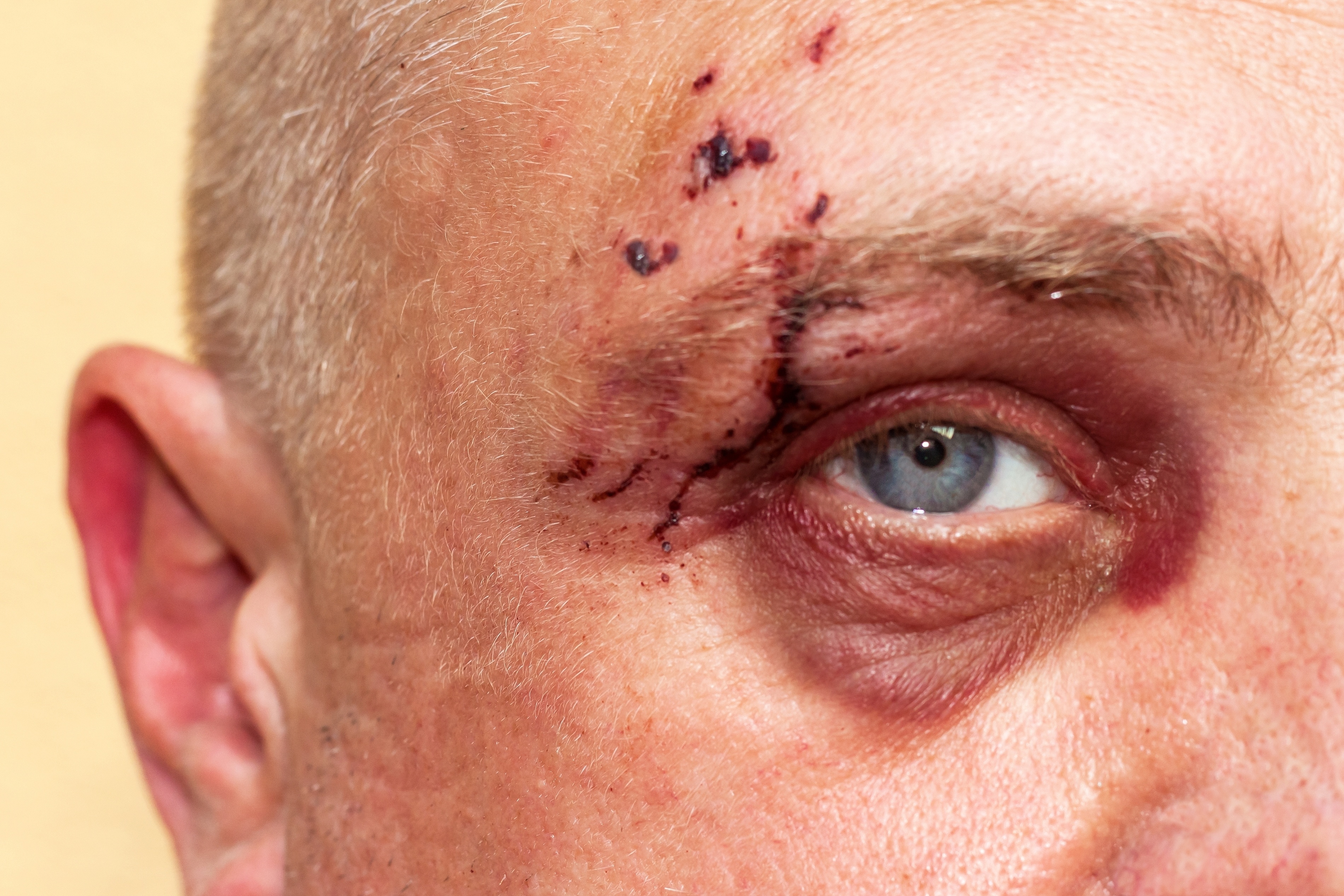
Implant and pre-implant surgery
Bone preparation and placement of dental implants to restore masticatory function and aesthetics. Modern bone grafting and implantology techniques for durable and natural results.
Learn more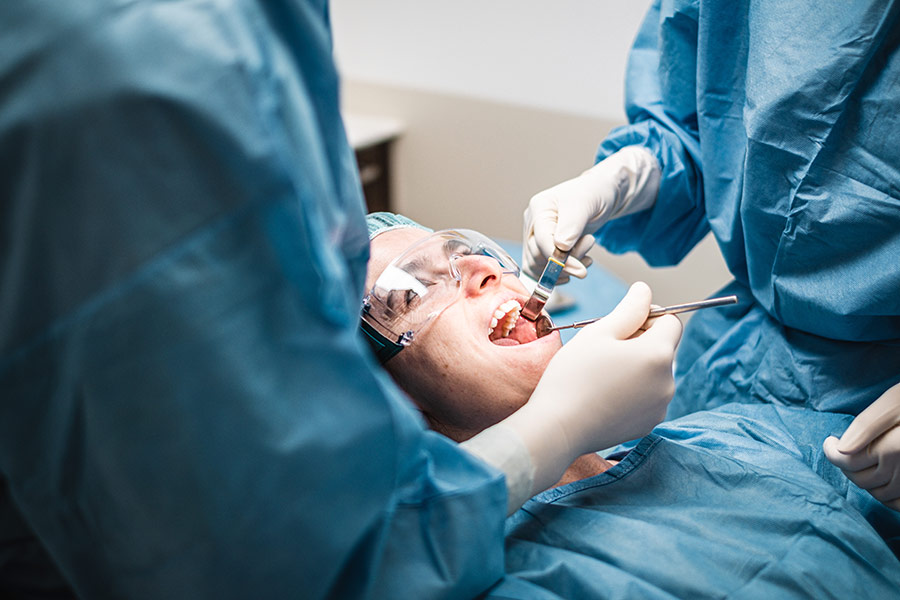
Maxillofacial oncology
Specialized management of benign and malignant tumors of the face, mouth and jaws. Multidisciplinary treatment with surgery, radiotherapy and chemotherapy for optimal results.
Learn more